



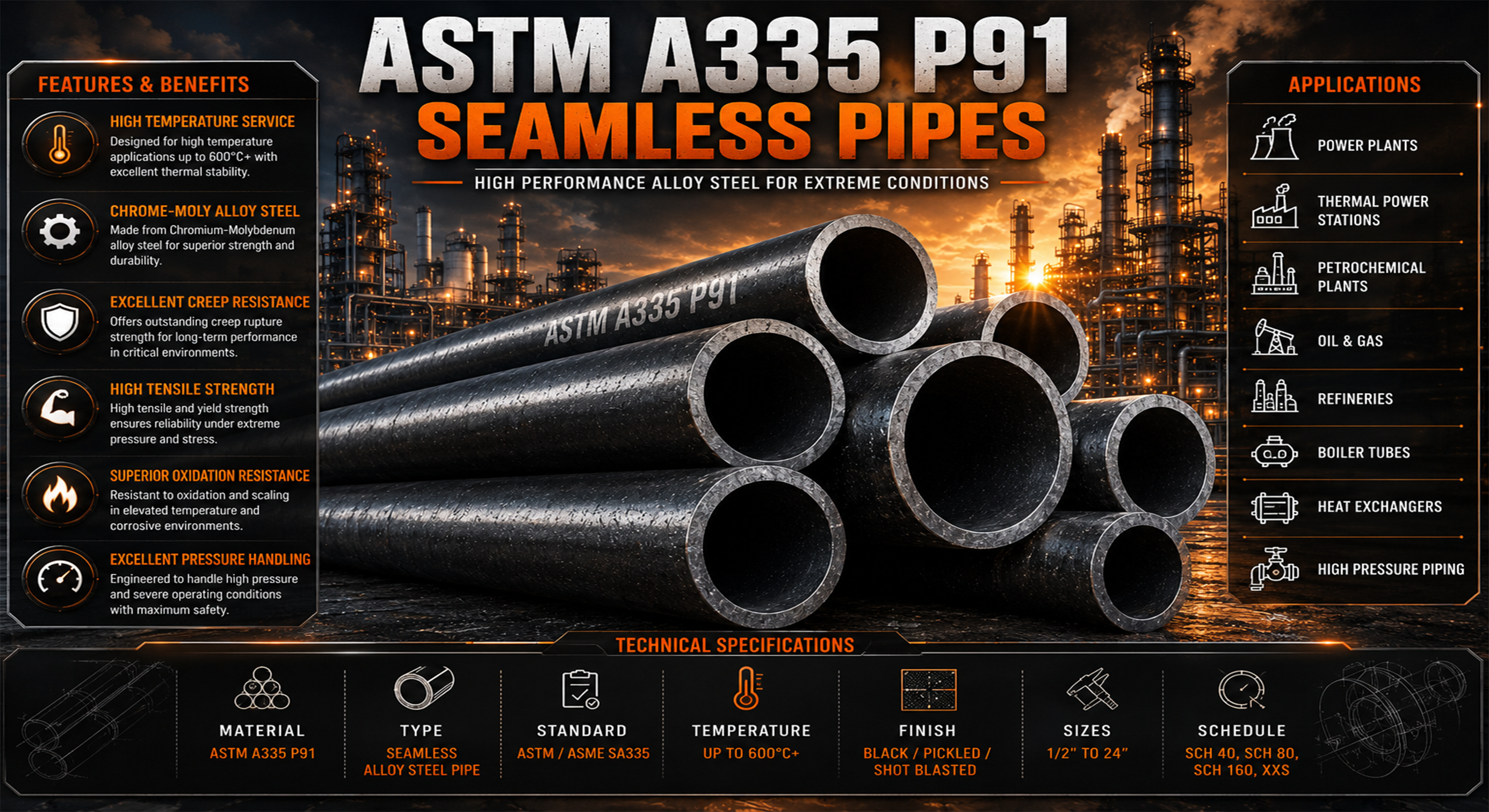
ASTM A335 P91 is an exceptional alloy steel designed to handle the
absolute extremes of high-temperature and high-pressure industrial environments. However,
even the strongest piping layouts can suffer from unexpected and costly failures if the
material is handled or sourced incorrectly.
Understanding why these pipe networks fail is the first step toward safeguarding your plant
infrastructure. As an established global ASTM A335 P91 Seamless Pipe Stockist, Revinox
Steel & Alloys LLP ensures your projects stay completely protected against these major
microstructural flaws.
The Core Challenge of Working with P91 Alloy Steel
Operating high-temperature industrial equipment requires materials that can survive constant thermal stress without warping. While standard steel grades expand and weaken under intense heat, P91 alloy steel is uniquely formulated to retain its rigid shape and structural strength. However, this high performance comes with a catch: the metal is highly sensitive to any errors made during its manufacturing or field installation.
Why the Metal's Inner Structure Matters
P91 is a Creep Strength Enhanced Ferritic (CSEF) steel that relies on a very specific internal crystal structure called tempered martensite. If this microstructural balance is disturbed during fabrication, the metal loses its mechanical load capacity.
The Risk of Rapid Temperature Swings
Unlike standard carbon steel, P91 behaves more like a delicate instrument when exposed to intense heat cycles. Any uncontrolled thermal shifts during welding or bending can permanently alter its strength.
Micro-Alloying Elements Require Absolute Purity
The exceptional creep resistance of this grade comes from tiny, highly controlled amounts of vanadium, niobium, and nitrogen. If these trace elements fall out of specification during steel production, the entire batch becomes vulnerable to cracking.
3 Common Causes of High-Temperature Piping Failure
When a P91 pipeline fails in the field, it is rarely due to normal wear and tear. Instead, catastrophic cracking is almost always caused by improper heat management or bad chemistry. Because this steel is engineered at a microscopic level, even a minor mistake during installation or procurement can trigger a massive system failure once the plant begins running at full pressure.
1. Uncontrolled Pre-Heating Practices During Welding
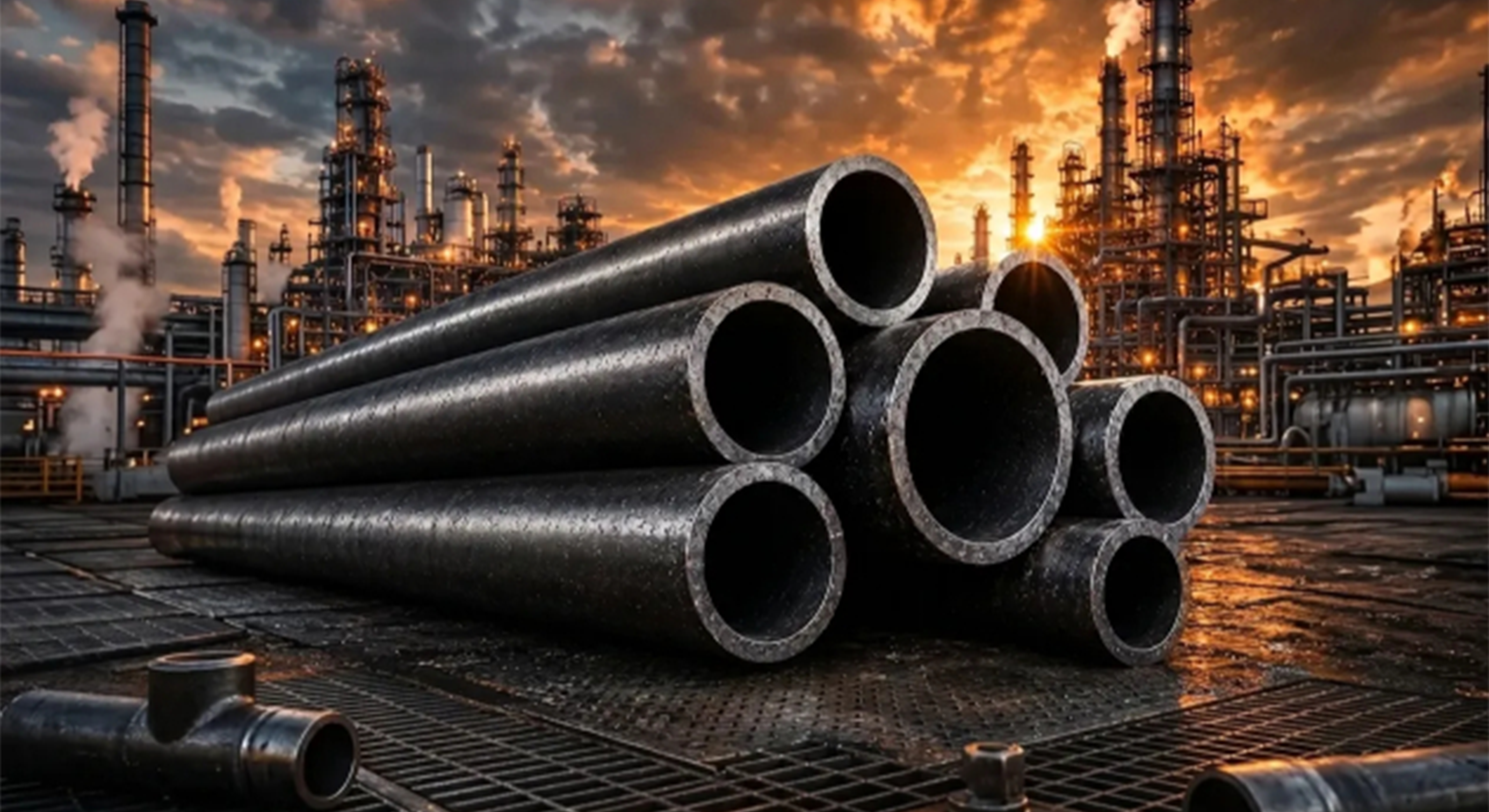
Welding P91 seamless pipes requires exact, steady temperature controls. Skipping the mandatory pre-heating phase causes the joint area to cool down far too rapidly, which leaves behind hard, brittle structural zones that crack under pressure.
2. Bad Heat Treatment After Welding
After field welding is completed, P91 pipes must undergo careful subcritical annealing to relieve internal stresses. Deviating from the required soaking time or temperature window creates a soft, weak zone known in the industry as "Type IV cracking".
3. Sourcing Steel with Hidden Chemical Defects
Buying from unverified traders can expose your project to substandard steel containing elevated levels of impurities like aluminum. Even tiny chemical deviations completely destroy the pipe's long-term creep rupture strength.
Sourcing Checklist: Eliminating Risks Before Installation
Preventing a pipeline disaster starts long before your engineering crew ignites a single welding torch on the job site. The most effective way to eliminate mechanical risks is to establish strict quality benchmarks during the initial purchasing phase. By verifying the pedigree of your steel beforehand, you ensure that every length of pipe entering your facility is physically capable of handling high-pressure operations.
Demanding Full Heat Number and MTC Traceability
The absolute best defense against field failure is verifying your material source long before a torch is lit. Every single pipe length must carry a stamped heat number that maps back to an official EN 10204 3.1 Mill Test Certificate.
Utilizing Positive Material Identification (PMI) Inspections
Premium global suppliers run automated spectrographic PMI tests on incoming material arrays. This testing double-checks the chromium and molybdenum ratios on-site to make sure no incorrect steel grades slip into your pipeline shipment.
Partnering with Globally Certified Supply Systems
Industrial safety demands verification at every stage of corporate management. Sourcing from a partner possessing verified ISO 9001:2015, ISO 14001:2015, and ISO 45001:2018 registration certifies that the facility adheres to strict international quality, environmental safety, and occupational health systems.
Seamless System Package Matching: Fittings and Flanges
A high-pressure steam network is only as strong as its weakest connection point. Purchasing premium P91 seamless pipes won't protect your plant if the connecting elbows, tees, and flanges are made from inferior or mismatched materials. To guarantee a leak-free lifecycle, procurement teams should always aim to source a fully cohesive, chemically matched hardware package from a single manufacturer.
Integrating High-Integrity WP91 Buttweld Fittings
A secure pipeline requires equal structural strength across every single bend and directional change. Sourcing your components alongside matching ASTM A234 WP91 Buttweld Fittings keeps your system's wall thickness uniform.
Securing Nodes with Premium F91 Forged Flanges
High-pressure steam systems demand leak-proof connections at flanged joints. Bundling your pipe orders with certified ASTM A182 F91 Flanges ensures identical thermal expansion rates across your entire hardware network.
Single-Source Procurement Saves Time and Budgets
Getting your pipes, forged components, and fittings from one reliable inventory source eliminates logistical headaches. It ensures all components share matching chemical pedigrees and identical quality compliance standards.
Secure Certified P91 Materials from Revinox Steel
At Revinox Steel & Alloys LLP, we understand the high stakes involved in heavy industrial engineering projects. We specialize in bridging the gap between stringent international material standards and fast, hassle-free global supply chains. Our team is committed to delivering fully verified, zero-defect piping solutions that safeguard your personnel and maximize your plant's long-term operational efficiency.
Global Turnaround from a Trusted Mumbai Stockist Hub
Revinox Steel & Alloys LLP manages a premier inventory of fully traceable, high-temperature alloy piping. We handle tight dimensional requirements and manage fast international shipping directly to your job site.
100% Quality Assurance on Every Industrial Shipment
Every single order leaves our facility backed by complete material test documentation, certified NDT assessments, and clear heat-stamped identification profiles. We focus on zero-defect distribution to keep your heavy infrastructure safe.
Request a Technical RFQ for Your Piping Bill of Materials
Ready to protect your upcoming power generation or refinery project from early pipeline wear? Explore our complete inventory directly on our ASTM A335 P91 Seamless Pipe product page , or send your technical specifications straight to our expert sales desk at sales@revinoxalloys.com for a fast, competitive quotation.